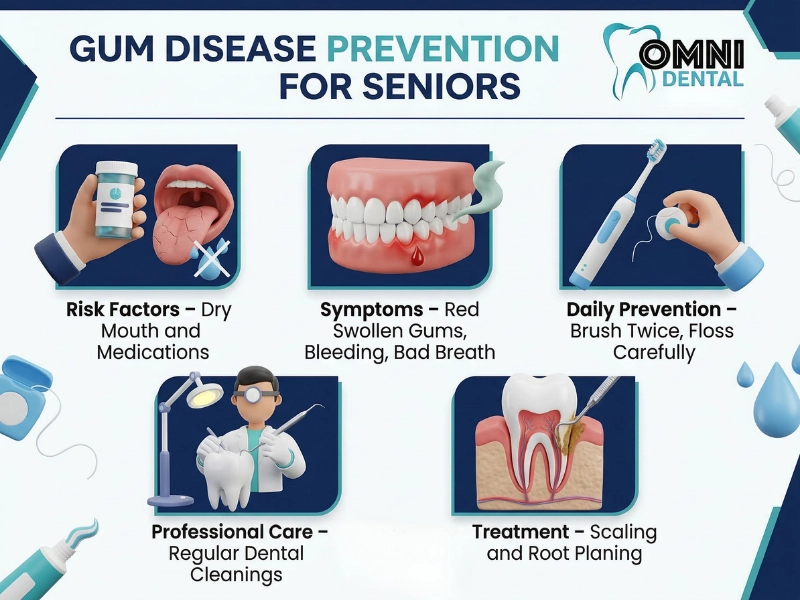
Gum disease in seniors is best prevented with twice-daily brushing, careful flossing, water for dry mouth, and regular professional cleanings. When it develops, treatment often starts with scaling and root planing, a deep cleaning below the gum line. Dry mouth from medications and arthritis that makes brushing harder raise the risk for older adults.
Key Takeaways
- Dry mouth from medications or health conditions lets bacteria grow faster in older adults.
- Arthritis or limited mobility can make brushing and flossing harder, so plaque builds up.
- Warning signs include red, swollen, or bleeding gums, bad breath, gum recession, and loose teeth.
- Brushing twice a day with fluoride toothpaste, flossing, and drinking water help prevent gum disease.
- Scaling and root planing removes plaque and tartar below the gum line when gum disease develops.
Estimated read: 4 min
Protecting oral health in older adults with simple daily habits
Gum Disease in Seniors: Prevention and Treatment is an important topic because many older adults face a higher risk of dental problems as they age. In this guide about gum disease in seniors: prevention and treatment, we explain how aging affects oral health and what steps protect your smile. As people grow older, changes in health condition, medications, and daily habits can increase the chance of infection. Therefore, early action and strong dental care routines help prevent serious issues.
Why Older Adults Face a Higher Risk
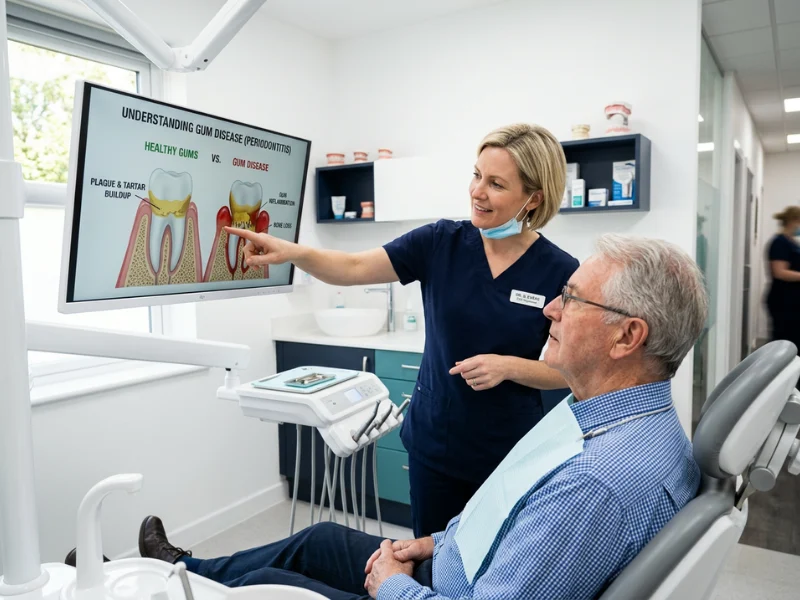
Older adults often deal with dry mouth due to medications or medical conditions. When saliva decreases, food particles stay longer on teeth and gums. As a result, bacteria grow faster and increase the risk of tooth decay and gum infection. In addition, some seniors struggle to brush and floss effectively because of arthritis or limited mobility. Consequently, plaque builds up and hardens into tartar.
If gum disease is left untreated, it can damage bone and lead to tooth loss. Research also shows a link between gum infection and heart disease. For this reason, protecting oral health supports overall wellness.
Symptoms of Gum Disease
Common symptoms of gum disease include red swollen gums, bleeding when you brush your teeth, bad breath, and gum tenderness. Some people notice gum recession or loose teeth. Because early signs can seem mild, many patients ignore them. However, prompt dental care stops infection before it spreads.
| Symptom | What It Means | Why It Matters |
|---|---|---|
| Red or swollen gums | Inflammation caused by plaque buildup | Early warning sign of gum infection |
| Bleeding when brushing | Gums become sensitive and irritated | May indicate gingivitis or early gum disease |
| Persistent bad breath | Bacteria trapped between teeth and gums | Often linked to infection under the gum line |
| Gum recession | Gums pull away from the teeth | Can expose roots and increase sensitivity |
| Loose teeth | Bone and tissue supporting teeth weaken | Sign of advanced gum disease |
Daily Prevention Steps
First, brush your teeth twice daily with fluoride toothpaste. Next, brush and floss carefully to remove plaque and tartar before it hardens. In addition, drink plenty of water to reduce dry mouth and wash away food particles. Good oral hygiene habits protect both teeth and gums.
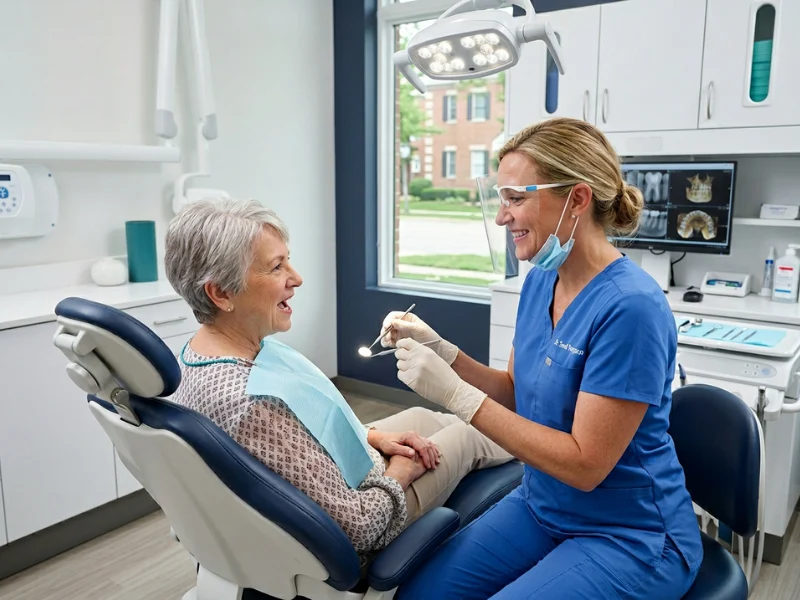
Regular professional cleanings also play a key role. During these visits, your dentist can remove plaque and tartar that brushing cannot reach. As a result, routine appointments lower your higher risk of advanced gum disease.
Treatment Options for Seniors
If gum disease develops, early dental treatment often includes scaling and root planing. This deep cleaning method helps remove plaque and tartar below the gum line. In more advanced cases, additional dental procedures may be necessary. Fortunately, early detection improves success and reduces discomfort.
Protecting Smiles in Arlington Heights
Seniors in Arlington Heights and nearby communities can schedule regular exams to monitor their oral health. Our dental team focuses on prevention, patient education, and gentle care. Through consistent visits and good oral hygiene at home, patients maintain strong gums and healthy teeth.
Gum Disease in Seniors: Prevention and Treatment remains essential for long term wellness. By brushing daily, attending professional cleanings, and addressing symptoms early, older adults protect their smiles and reduce serious health risks.
FAQ
How can seniors prevent gum disease at home?
Older adults can prevent gum disease by maintaining good oral hygiene every day. Brush your teeth twice daily with fluoride toothpaste, brush and floss carefully to remove plaque and tartar, and drink plenty of water to reduce dry mouth. In addition, routine professional cleanings help protect oral health and lower the higher risk of infection.
Can gum disease affect overall health in seniors?
Yes, gum disease can impact overall oral health and may be linked to heart disease and other health condition concerns. If left untreated, infection can spread and increase inflammation in the body. Therefore, early dental care and regular checkups are essential for older adults to maintain both gum health and general wellness.
What happens if gum disease is left untreated in seniors?
If gum disease is left untreated, it can lead to tooth decay, bone loss, and even tooth loss. The gums may remain red swollen and painful, and infection may worsen over time. However, early dental treatment such as scaling and root planing can remove plaque and tartar, control infection, and protect long term oral health.

About the author
Dr. Bilus D PolesDDS,MAGD,DICOI, DIDIA
Founder and lead dentist of Omni Dental of Arlington Heights. Master of the Academy of General Dentistry and Board Certified Diplomate of the ICOI and IDIA. Illinois license #019.027365.