About 3 in 4 Americans fear the dentist, according to a JADA survey in which 72.6% of 1,003 U.S. adults reported dental fear. Many trace it to childhood experiences, and the fear often leads to skipped care. Clear communication, relaxation techniques, and sedation options can make visits easier.
Quick Read SummaryA new study published in the Journal of the American Dental Association reveals that nearly 73% of U.S. adults experience some degree of dental fear, with many tracing it back to negative childhood experiences. This fear often leads to skipped appointments, worsening oral and overall health, and emotional stress. The article highlights Omni Dental’s patient-centered strategies such as clear communication, comfort amenities, relaxation techniques, and sedation options to ease anxiety. It also outlines practical steps patients can take to manage their fears, emphasizing trust, empathy, and supportive care as vital for overcoming dental anxiety.
americans-dental-fear-solutions
|
Dental fear also shapes how dental practices operate. Here is how Omni Dental of Arlington Heights approaches it and what you can do to feel more at ease.
What the Study Found
- Prevalence of fear: Out of 1,003 U.S. adults surveyed, about 45.8% described a moderate level of dental anxiety, and 26.8% reported severe fear when visiting the dentist.
- Origins often trace back to childhood: Many adults linked their fear to early negative or traumatic experiences, painful procedures, feeling out of control, or being treated harshly.
- Health consequences: Dental fear doesn’t just cause anxiety; it leads to avoidance of routine care. That means minor issues like cavities or gum irritation often go untreated until they become serious problems.
- Desire for help: Over 71% of those with moderate to severe fear said they would be interested in a free, brief treatment that could be done at home. Programs like Dental FearLess, combining digital tools and telehealth, showed promising results in lessening fear for many participants.

Why It Matters for Patients & Oral Health
- Avoidance leads to emergencies: When routine checkups and cleanings are skipped, dental disease has more opportunity to progress. That often means more invasive procedures later on.
- Worsening overall health: Poor oral health is not isolated. It’s connected with heart disease, diabetes, and other chronic conditions. Delayed dental care can thus have broader health implications.
- Emotional stress: Beyond just the physical, fear can create significant mental distress, anxiety, dread before appointments, and feelings of being judged or ashamed.
How Omni Dental of Arlington Heights Helps Patients Overcome Dental Fear
At Omni Dental, we understand dental fear isn’t something you “get over.” It often requires care, sensitivity, and multiple strategies. Here are ways our practice is working to make visits more comfortable:
| Category | Details |
|---|---|
| Patient-centered communication | We listen carefully to concerns, triggers, and past dental experiences. We explain procedures in simple, clear terms so you know what to expect. We let you set the pace; pauses, breaks, and stop signals are always welcome. |
| Comfort-enhancing amenities | Music or headphones to block out disturbing sounds. Warm blankets, comforting decor, and a calming waiting area. Soothing distractions in treatment rooms (TVs, screens, etc.). |
| Relaxation & behavioral techniques | Guided breathing, mindfulness, or visualization before and during procedures. Progressive muscle relaxation. Tell–Show–Do methods (beneficial with children) to reduce surprises and build trust. |
| Sedation & sedation alternatives | Options like nitrous oxide (“laughing gas”) for mild to moderate anxiety. Sedation or anesthetic enhancements for those with severe fear are always with safe protocols. |
| Technology-enabled resources | Telehealth consults to discuss fears and plan treatment in advance. Digital tools or apps for at-home anxiety reduction (inspired by programs like Dental FearLess). |
| Staff training | Our team receives ongoing education on working with anxious patients. Creating empathy, patience, and a nonjudgmental environment is part of who we are. |
What You, The Patient, Can Do to Reduce Dental Fear
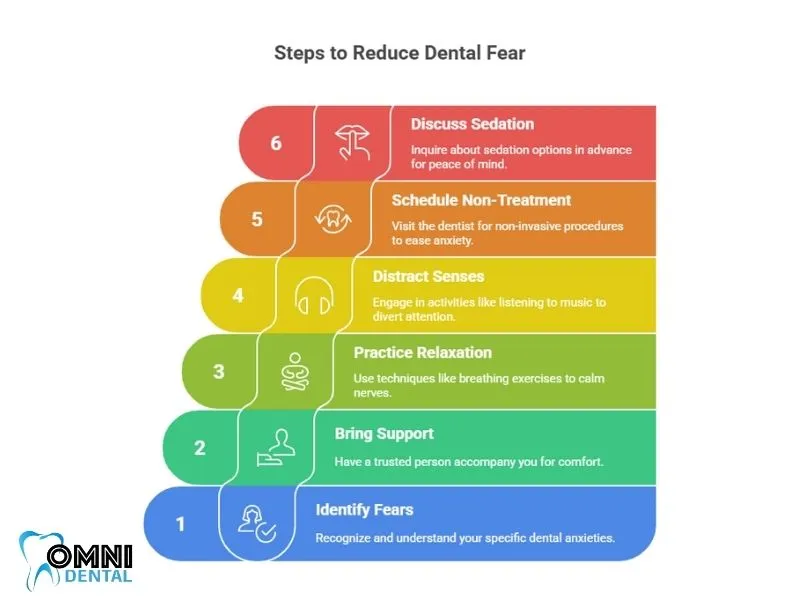
Even before your next appointment, there are steps you can take to reduce anxiety and feel more in control:
- Identify your specific fears: Is it the pain? The drill sound? Needles? Uncertainty? Once you know, you can communicate them.
- Bring a trusted person for support, whether in the waiting room or during the appointment.
- Practice relaxation techniques, such as breathing exercises, guided imagery, and meditation.
- Distract your senses: listen to music, use noise‑cancelling headphones, have something comforting in hand.
- Schedule “non‑treatment” visits: sometimes just coming in for a chat, or a cleaning, without any invasive work, can help ease anxiety.
- Ask about sedation ahead of time. Don’t wait until you’re in the chair to find out what your options are.
Why Trust and Empathy Matter in Every Dental Visit
The study emphasizes that trauma, especially in childhood, leaves a lasting imprint. Feeling ignored, harshly treated, or out of control during a dental visit can turn a routine experience into lasting fear. At Omni Dental:
- We aim to see every patient as a partner, not just someone receiving treatment.
- Transparency is essential: costs, benefits, timelines, and what you can expect.
- We avoid force, pressure, or any treatment techniques that feel pushing.
These steps help prevent the formation of new negative memories and rebuild trust for those who’ve had bad experiences before.
Conclusion: Moving Forward with Confidence
The headline statistics, 3 in 4 Americans fear the dentist, might sound daunting, but they also represent opportunity: opportunity for change, for better care, and for healing. At Omni Dental of Arlington Heights, we believe that fear shouldn’t hold you back from a healthy, confident smile.
If dental visits cause you dread:
- Please reach out to us in advance of your appointment. Let’s talk about your fears.
- Ask about what comfort measures and sedation options we offer.
- Use some techniques at home to practice calming your mind.
You deserve gentle, respectful dental care that supports your emotional well‑being as much as your oral health. And when those fears are addressed, both your smile and peace of mind can improve.

About the author
Dr. Bilus D PolesDDS,MAGD,DICOI, DIDIA
Founder and lead dentist of Omni Dental of Arlington Heights. Master of the Academy of General Dentistry and Board Certified Diplomate of the ICOI and IDIA. Illinois license #019.027365.