
Managing pain after cosmetic dental procedures usually takes ice, rest, pain relief medication and gentle oral care. Most discomfort is mild to moderate. It tends to peak within 24 to 48 hours, then fades. The first two days matter most, so plan to take it easy and follow your dentist’s aftercare steps.
Key Takeaways
- Pain and swelling after cosmetic dental procedures are normal and usually peak within 24-48 hours, then gradually improve.
- Over-the-counter pain relievers like ibuprofen or acetaminophen work for most minor discomfort; some procedures may require prescription pain medication.
- Reduce swelling with ice packs for the first 24 hours, then warm compress therapy, and keep your head elevated while resting.
- Soft foods, warm salt water rinses, and avoiding strenuous activity speed healing and minimize post-procedure complications.
Read time: 5 min
Pain Management Strategies
Over-the-Counter Pain Relief
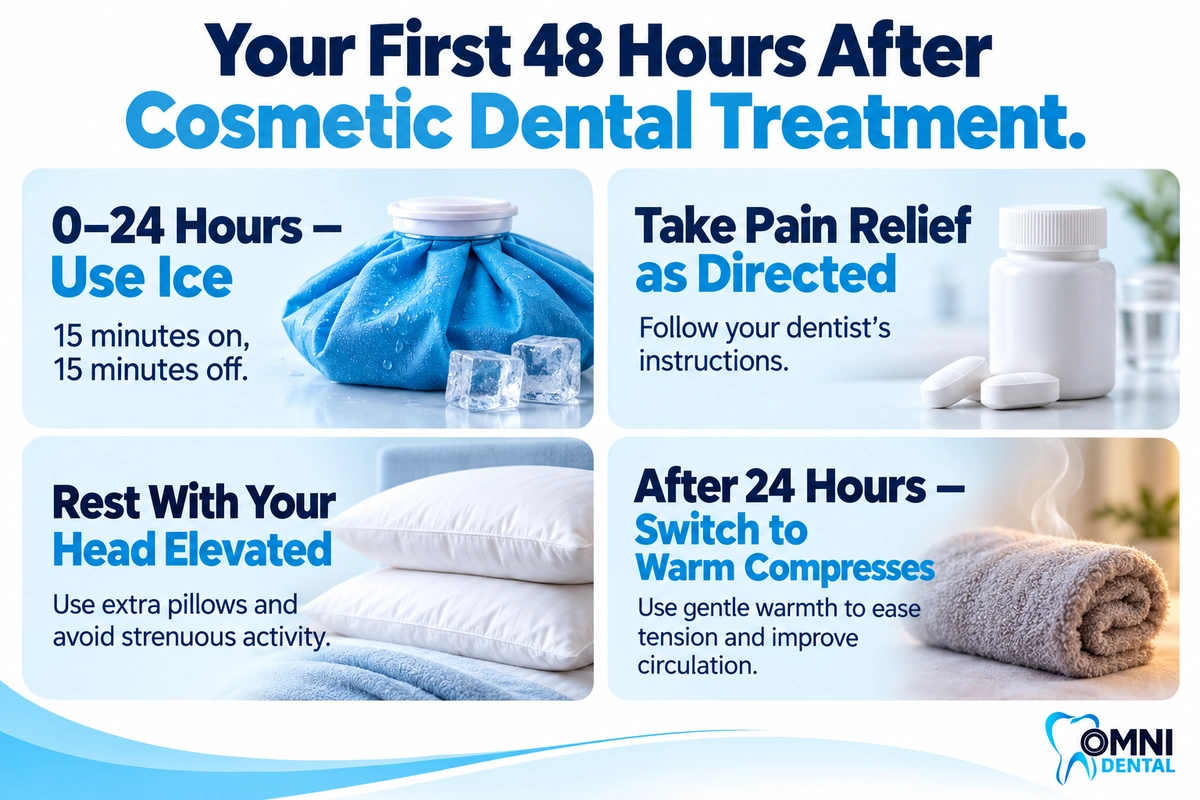
Ibuprofen or acetaminophen reduce discomfort and inflammation for most cosmetic procedures. Take pain medication before anesthesia wears off. Follow label directions and your dentist’s instructions.
Prescription Pain Medication
More extensive procedures may require prescription pain medication. Your dentist determines if needed based on procedure complexity. Common options include opioids for severe pain or stronger anti-inflammatory drugs for intense swelling. Take exactly as prescribed.
Ice and Heat Therapy
Ice reduces swelling and numbs the treated area. Apply ice packs for 15 minutes on, 15 minutes off during the first 24 hours after your procedure. This vasoconstriction limits inflammation at the surgical site and provides natural pain relief. After 24 hours, switch to warm compress therapy. A warm, damp cloth applied to the outside of your cheek encourages blood circulation and eases muscle tension, reducing pain and accelerating the healing process. The transition from ice to heat marks an important shift in your recovery.
Rest and Elevation
Sleep and rest are critical for recovery. Keep your head elevated while lying down by using extra pillows. Elevation reduces blood flow to the surgical site, minimizing swelling and discomfort significantly. Avoid strenuous activity, exercise, and heavy lifting for at least one week after your procedure. Increased heart rate and blood pressure worsen swelling and delay healing. Rest allows your body’s natural healing mechanisms to work effectively.
Post-Procedure Oral Care
Soft Foods and Hydration
Eating soft foods protects the surgical site and allows healing without added stress. Choose mashed potatoes, yogurt, applesauce, soup (cooled to room temperature), smoothies, and scrambled eggs. Avoid hard, crunchy, hot, or spicy foods that irritate the healing area. Drink plenty of water to stay hydrated, but avoid alcohol and caffeine, which can interfere with the healing process and increase swelling.
Warm Salt Water Rinses
Starting 24 hours post-procedure, rinse with warm salt water several times daily. Mix one-half teaspoon salt in eight ounces warm water. Salt water reduces oral bacteria, decreases inflammation, and promotes gum healing. Gently swish and spit without vigorous rinsing, which can disturb the surgical site. Warm salt water is one of the most effective natural aids for post-procedure recovery.
Oral Hygiene Without Disruption
Brush gently with a soft-bristled toothbrush, avoiding the surgical site for the first week. Wait before flossing near the treated tooth as recommended by your dentist. Careful hygiene prevents infection.
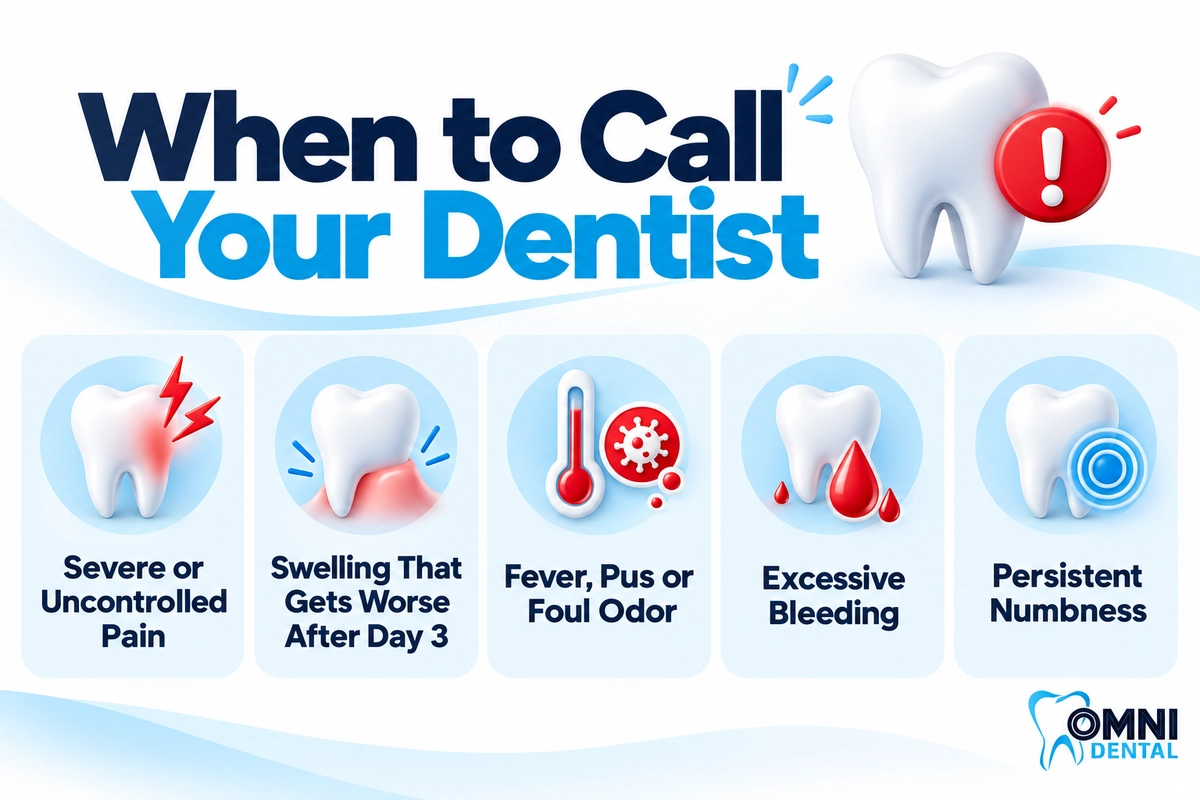
When to Call Your Dentist
Contact your dentist if you experience severe uncontrolled pain, worsening swelling after day 3, signs of infection (fever, pus, or foul odor), excessive bleeding, or persistent numbness. Your dentist can address complications and accelerate healing.
Frequently Asked Questions
What prescription pain medication is commonly prescribed for tooth extraction pain?
Dentists prescribe stronger anti-inflammatory drugs like prescription-strength ibuprofen for moderate pain, or opioids for severe pain (typically 3-7 days). Your dentist determines the best option based on your procedure and medical history. Never share prescription medication or exceed recommended doses. Most patients transition to over-the-counter relief after the first few days.
How long does it take to recover from dental surgery?
Recovery varies by procedure type. Minor cosmetic procedures need only hours of care, while complex procedures like implants take weeks or months. Acute pain and swelling typically resolve within 3-7 days. The surgical site heals beneath the surface for 2-4 weeks. Full healing and aesthetic results may take several months. Your dentist provides a specific timeline for your procedure.
How to get rid of swelling after mouth surgery?
Ice for the first 24 hours (15 on, 15 off) reduces swelling. After 24 hours, use warm compresses. Elevate your head and avoid strenuous activity, alcohol, and caffeine. Take ibuprofen for internal inflammation. Most swelling resolves within 3-5 days. Contact your dentist if swelling worsens after day 3.
How to deal with tooth pain after the dentist?
Take over-the-counter pain relievers before anesthesia wears off. Use ice packs for the first 24 hours, then warm compresses. Eat soft foods and rinse with warm salt water starting 24 hours post-procedure. Rest and keep your head elevated. Most pain resolves within a few days. Contact your dentist if pain persists beyond one week or is severe.

Questions about your recovery?
Contact our Arlington Heights team if you experience unexpected pain or complications after your cosmetic dental procedure. We’re here to support your recovery.

About the author
Dr. Bilus D PolesDDS,MAGD,DICOI, DIDIA
Founder and lead dentist of Omni Dental of Arlington Heights. Master of the Academy of General Dentistry and Board Certified Diplomate of the ICOI and IDIA. Illinois license #019.027365.