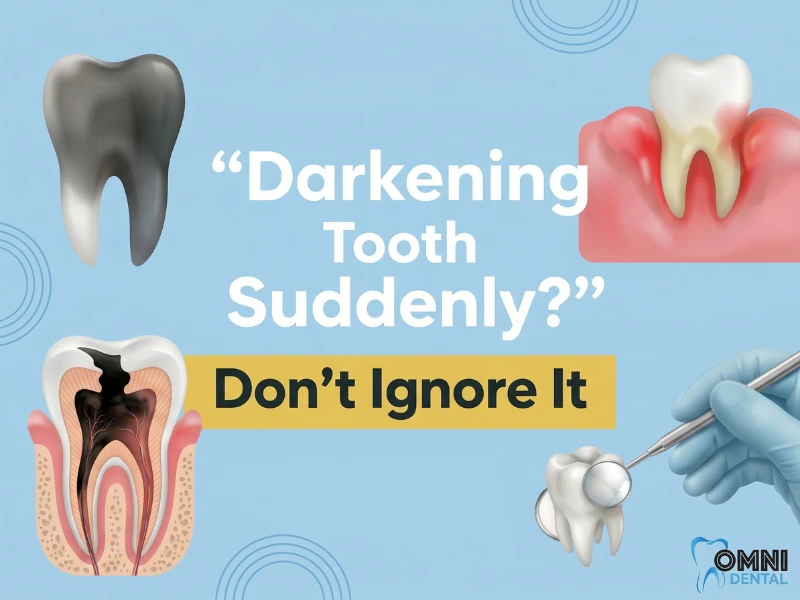
The top signs you need a root canal are lingering tooth pain, lasting hot or cold sensitivity, swollen gums, and a darkening tooth. These often mean infection or damage has reached the nerve inside the tooth. Early treatment can stop the infection and save the natural tooth.
Key Takeaways
- Persistent tooth pain, especially when chewing, is one of the most common signs.
- Sensitivity to hot or cold that lingers after the food or drink is gone may mean the nerve is inflamed.
- Swollen, tender gums or a small bump near one tooth can signal infection.
- A tooth turning gray or darker than the others may have damaged inner tissue.
- A root canal removes infected tissue, relieves pain, and saves the natural tooth.
Estimated read: 4 min
Early warning signs of infection or damage you should never ignore
When patients search for Top Signs You Need a Root Canal, they are usually worried about pain, swelling, or sudden changes in a specific tooth. In many cases, these symptoms point to infection or damage deep inside the tooth. The inner area contains nerves and blood vessels, and when bacteria reach this space, serious dental issues can develop. Therefore, recognizing the warning signs early helps you protect your smile and avoid tooth loss.
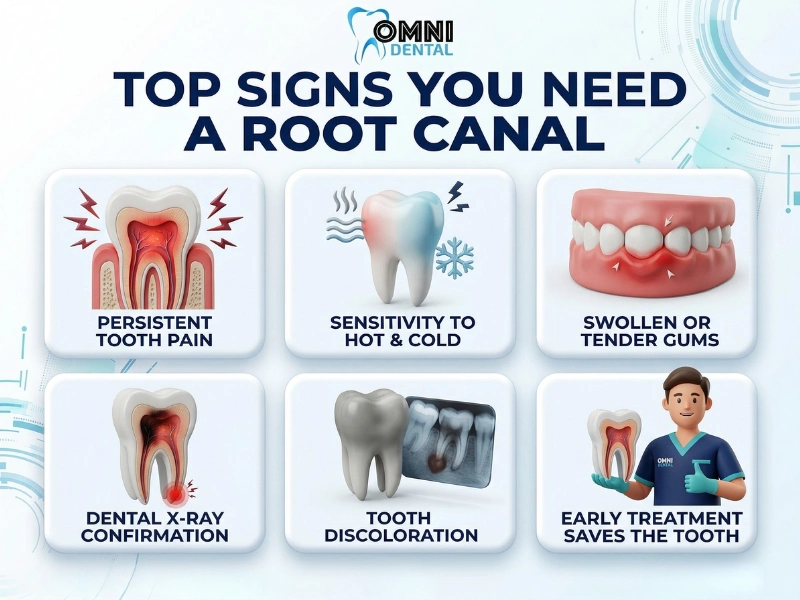
Persistent Tooth Pain That Does Not Go Away
One of the most common symptoms is persistent tooth pain. The discomfort may feel sharp, dull, or throbbing. Sometimes it worsens when chewing or applying pressure. In other cases, the pain spreads to the jaw or ear.
If you are experiencing any of these symptoms, you may require a root canal to remove the infected tissue and stop the pain.

Sensitivity to Hot and Cold
Another warning sign is sensitivity to hot and cold that lingers long after the source is gone. For example, drinking coffee or eating ice cream may trigger strong discomfort. If the pain continues for several seconds, it could mean the nerves and blood vessels inside the tooth are inflamed. Sensitivity to hot and cold that becomes more intense over time often signals an infected tooth that needs prompt dental treatment.
Swollen or Tender Gums
Swollen or tender gums near a specific tooth may also indicate infection or damage. The area might feel sore or look puffy. In some cases, a small bump appears on the gums. Because this can signal a serious dental issue, quick dental care is important to prevent further complications.
Discoloration of the Tooth
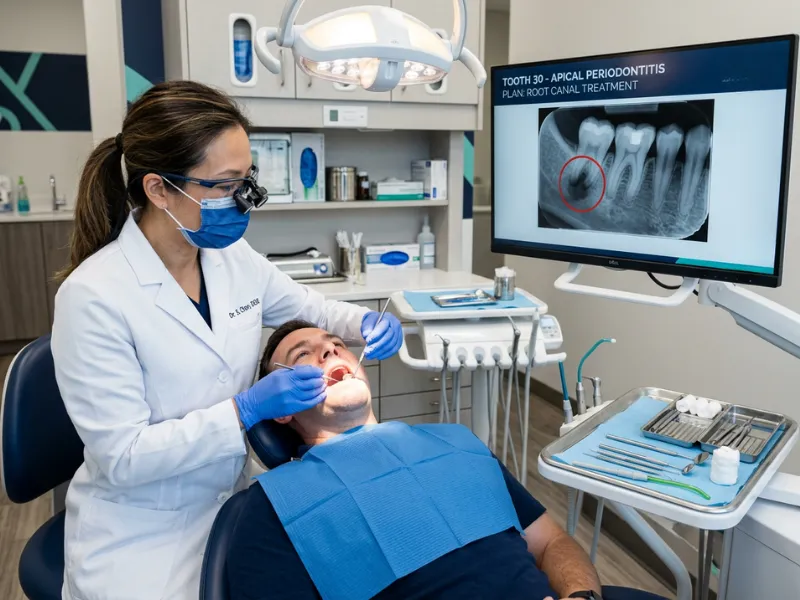
Discoloration of the tooth is another sign to watch for. If a tooth is turning gray or darker than surrounding teeth, the inner tissue may be damaged. A cracked or chipped tooth can allow bacteria to enter and infect the pulp. As a result, the tooth may require a root canal procedure to restore health and function.
What Happens During Root Canal Treatment
Root canal treatment removes infected tissue from inside the tooth. First, your dentist cleans the inner chamber. Then the space is sealed to prevent future infection. This root canal procedure relieves pain and saves your natural tooth. With proper dental care, the treated tooth can last for many years.
When to See a Dentist in Arlington Heights
If you notice ongoing pain, swelling, or sensitivity, schedule an exam right away. Early dental treatment prevents bigger dental issues later. Patients in Arlington Heights and nearby NW Chicago suburbs can visit our office for gentle, modern care. Prompt evaluation ensures the best outcome and protects your long term oral health.
Protecting Your Smile From Future Problems
Although some teeth require a root canal due to deep decay or trauma, prevention is still possible. Regular checkups, good brushing habits, and fast treatment of cracked or chipped teeth reduce your risk. Most importantly, never ignore persistent tooth pain or unusual changes in a specific tooth.
If you recognize these Top Signs You Need a Root Canal, contact our Arlington Heights dental team today. Early care stops infection or damage before it spreads and helps you avoid more complex procedures.
FAQ
What are the first signs of needing a root canal?
The first signs often include persistent tooth pain, sensitivity to hot and cold, swollen or tender gums, and discoloration of the tooth. If you are experiencing any of these symptoms, you may have an infected tooth that requires a root canal treatment to remove bacteria from the nerves and blood vessels.
What is the 3-3-3 rule for toothache?
The 3 3 3 rule suggests seeing a dentist if pain lasts three days, spreads, or becomes severe. While it is not a medical rule, ongoing tooth pain can signal infection or damage. Therefore, prompt dental care helps determine if you require a root canal or another dental treatment.
At what point is it too late for a root canal?
It may be too late for a root canal if the tooth structure is severely damaged or the infection has destroyed too much bone. However, early evaluation improves the chance of saving the tooth with a root canal procedure rather than extraction.
Is a root canal worth it?
Yes, root canal treatment is worth it because it removes infection, relieves pain, and preserves your natural tooth. Saving your tooth supports proper chewing, prevents shifting teeth, and avoids more complex restorative dentistry procedures.

About the author
Dr. Bilus D PolesDDS,MAGD,DICOI, DIDIA
Founder and lead dentist of Omni Dental of Arlington Heights. Master of the Academy of General Dentistry and Board Certified Diplomate of the ICOI and IDIA. Illinois license #019.027365.