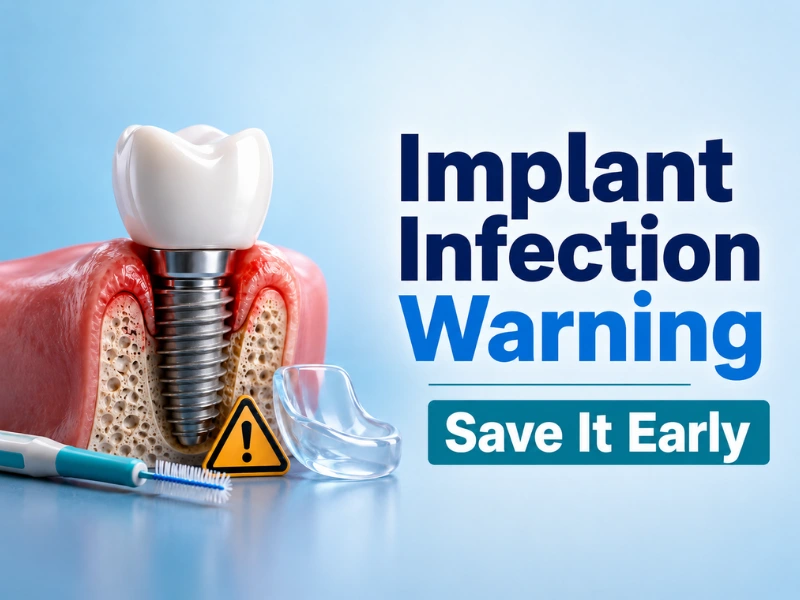
The first warning signs of dental implant infections are usually gum redness, swelling, bleeding, or bad breath around the implant. A 2026 Rutgers study suggests titanium particles may weaken immune defenses, making these infections harder to treat with antibiotics alone. See your dentist early, since prompt cleaning can often save the implant.
Key Takeaways
- A 2026 Rutgers study links titanium particles to harder-to-treat dental implant infections.
- The particles may impair immune cells, which may help explain why antibiotics often fall short around implants.
- Early warning signs include redness, swelling, bleeding, and bad breath at the gumline.
- Daily care, professional cleanings, and regular dental visits help protect the bone supporting the implant.
- Left untreated, peri-implant infection can cause bone loss and possible implant failure.
Estimated read: 4 min
New Research Links Titanium Particles to Stubborn Implant Infections
Researchers at Rutgers School of Dental Medicine studied why infections around implants resist treatment. Their work appeared in April 2026 in the journal PNAS Nexus. Moreover, it focused on the implant surface rather than bacteria alone.
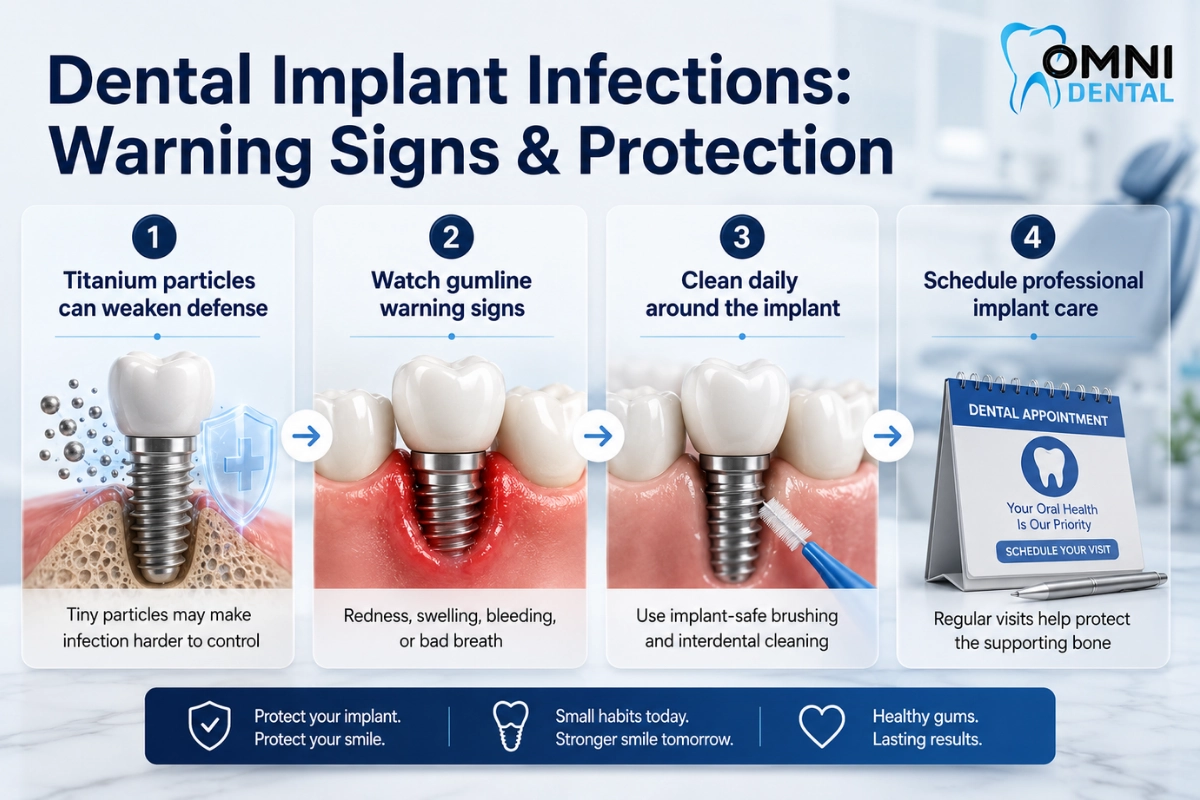
Bacterial biofilms can corrode a titanium surface and release microscopic particles. These fragments then enter the surrounding gum tissue. According to the team, the debris interferes with the immune cells that normally clear bacteria.
As a result, inflammation can continue, and bone loss can follow. You can read the wider coverage in Dental Tribune and the original PNAS Nexus study. Both explain why standard medicine often falls short around implants.
Why Antibiotics Sometimes Fail Around Implants
Antibiotics target bacteria, yet implant disease is not only a bacterial problem. When titanium particles impair your immune cells, the body may struggle to finish clearing the infection. Consequently, the same medicine that works around natural teeth can fall short around an implant.
Dentists call this peri-implant inflammation peri-implantitis. Left untreated, it slowly destroys the bone supporting the implant. Because the particles may keep the immune response stuck, the dentist must clear the biofilm and any damaged surface. That step matters as much as a prescription.
Warning Signs of Dental Implant Infections
Catching dental implant infections early gives you the best chance to save the implant. Most early warning signs appear at the gumline. Therefore, learn what healthy tissue feels like so you notice changes fast.
- Redness, swelling, or tenderness in the gum around the implant
- Bleeding when you brush or floss the area
- Persistent bad breath or a bad taste in your mouth
- Gum recession that exposes more of the implant
- A loose crown, or the implant itself, feels mobile
Pus, deep gum pockets, and exposed threads are more advanced signs of trouble. When bacteria accumulate around the implant for weeks, the damage can reach the bone. So book a visit quickly, because a dentist can often save an infected implant when you act early.
| Warning Sign | What It May Indicate | Recommended Action |
|---|---|---|
| Redness or swelling around the implant | Early gum inflammation | Schedule a dental evaluation as soon as possible |
| Bleeding when brushing or flossing | Possible peri-implant mucositis | Improve oral hygiene and contact your dentist |
| Persistent bad breath or bad taste | Bacterial buildup around the implant | Book a professional cleaning and examination |
| Gum recession | Loss of supporting tissue around the implant | Seek prompt assessment to prevent further damage |
| Loose crown or implant movement | Possible bone loss or implant instability | Contact your dentist immediately |
| Pus or exposed implant threads | Advanced peri-implant infection | Urgent dental treatment is required |

How to Protect Your Implant
Strong daily care helps prevent most problems. First, brush twice a day, clean between your teeth, and maintain excellent oral hygiene around the implant. Because plaque starts the whole cycle, good oral hygiene is your first line of defense and helps stop infections before they begin.
Professional cleanings and regular dental visits matter just as much. In addition, your hygienist uses implant-safe tools that avoid scratching the surface. This careful approach may help limit surface damage, which ties into the concern the new study raised. To learn more, review our implant maintenance guidelines.
Some people face a higher risk. Smoking, poor oral hygiene, and a weakened immune system all speed up damage. By managing these factors, you are preventing complications and reducing the chance of implant failure. Staying alert to dental implant infections helps keep small issues small.
Frequently Asked Questions About Dental Implant Infections
How do I keep my dental implants from getting infected?
Brush and floss daily, and keep your professional cleanings on schedule. Avoid smoking, and report any redness or soreness early. Together, these habits help prevent infections and protect the bone around each dental implant.
What is the 3/2 rule for dental implants?
The 3/2 rule is often described as a placement spacing guideline: about 3 mm between two implants and roughly 1.5 to 2 mm between an implant and a natural tooth. This spacing helps protect bone and gum tissue, though your surgeon will plan exact spacing for your case.
What kills tooth infection bacteria?
Typically, dentists remove infection by clearing the biofilm, often with deep cleaning, laser therapy, or antiseptics. Medication can help too. However, it rarely works well on its own around implants, as recent research shows.
How do I know if my body is rejecting my dental implant?
True rejection is rare. Still, watch for ongoing pain, swelling, a loose implant, or gum recession. These signs suggest peri-implant disease, so see your dentist promptly.
Worried About Your Implant?
Our Arlington Heights team can check the tissue around your implant and catch infection early. Contact us or call (847) 483-8833 to schedule a visit.

About the author
Dr. Bilus D PolesDDS,MAGD,DICOI, DIDIA
Founder and lead dentist of Omni Dental of Arlington Heights. Master of the Academy of General Dentistry and Board Certified Diplomate of the ICOI and IDIA. Illinois license #019.027365.